






From Nectar to Honey
Honey begins as nectar. Thin, watery, and fleeting, it starts in flowers, not in the hive.
A forager bee visits blooming plants and draws nectar up with her tongue, storing it in a special honey stomach called a crop. On the way home, that nectar is already beginning to change. Once she returns to the colony, she passes it to house bees, and the hive takes over. Nectar is shared, worked, spread into comb cells, and slowly transformed into something denser, richer, and far more stable. Bees don’t find honey sitting in flowers. They make it, from what flowers give them.
What Role Do Enzymes Play in Producing Honey?
Enzymes are part of what turns nectar into honey instead of leaving it as sweet flower fluid.
As bees handle nectar, they add enzymes that begin changing its sugar structure. One of the most important jobs those enzymes do is break down more complex sugars into simpler ones, helping shift nectar toward the chemistry of honey. That matters for flavor, texture, and shelf stability. Enzymes are not doing the whole job alone, though. They work alongside another essential step: drying.
Fresh nectar contains a lot of water. If bees stopped at enzyme work, they still would not have honey. The colony has to reduce that moisture by spreading nectar into the comb and fanning air through the hive with their wings. As the water content drops, the liquid thickens. What began as delicate nectar gradually becomes the honey we recognize.
How Do Bees Build a Hive?
Strictly speaking, bees build comb, and in managed beekeeping that comb is built inside a hive.
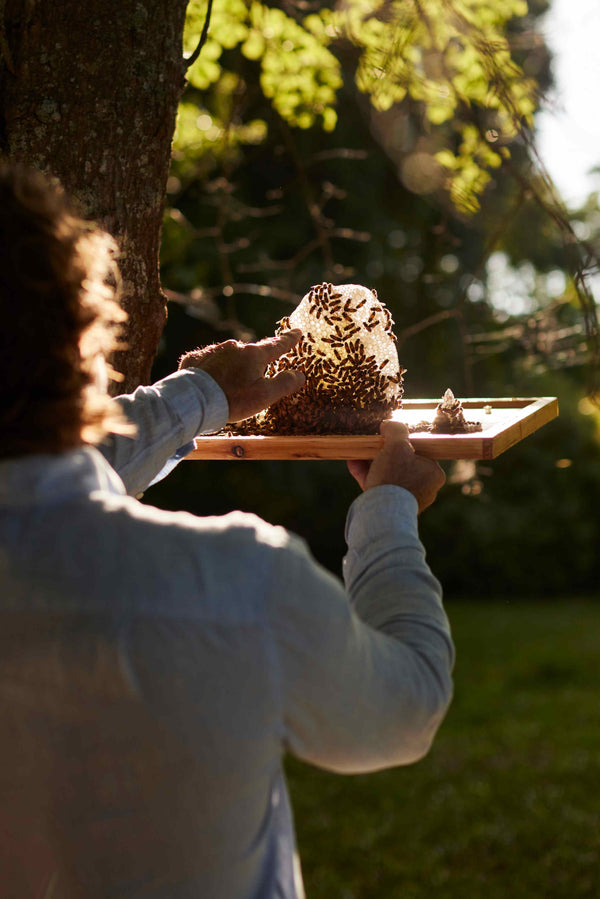
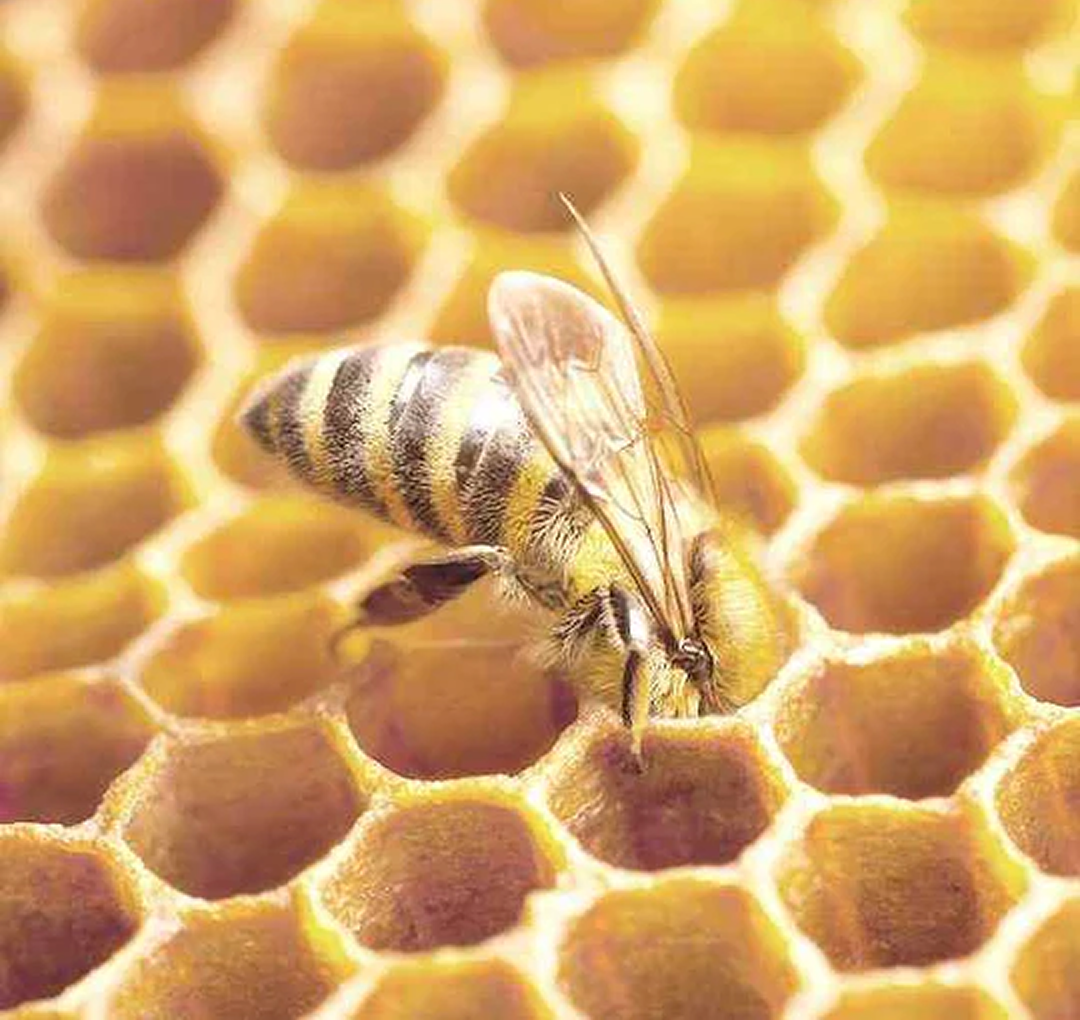
A hive is the larger home, whether it is a hollow tree in nature or a wooden box placed by a beekeeper. What the bees themselves build is the honeycomb inside it. Worker bees produce wax from glands on their abdomens, forming tiny wax scales. They chew and shape that wax into the hexagonal cells that make comb so efficient and strong.
Those cells do almost everything. Some hold nectar being turned into honey by worker bees. Some store pollen. Others cradle developing bees. The hive works because the comb works, and the comb works because thousands of bees build it, cell by cell.
The cellular nature of the hive is easy to overlook when you see a finished frame of capped honey. But the structure itself is part of the miracle. Bees are not just storing food. They’re building the architecture that makes colony life possible.
How Much Honey Do Bees Make in a Year?
There isn’t one fixed answer, because honey production changes with weather, bloom conditions, forage, region, hive strength, and season length.
In a strong year, a healthy colony can produce a hundred pound surplus. In a weak year, the same colony may make far less, or barely enough for itself. That swing is one reason good honey should never be talked about like a factory output. Bees are working inside living landscapes, and landscapes do not perform the same way every season.
It also helps to remember scale. A colony may store a meaningful amount of honey over the course of a year, but each individual bee contributes only a tiny share over her lifetime—usually around one twelfth of a teaspoon.
It’s important to remember that honey is food for bees first, so beekeepers harvest only the surplus that healthy colonies can spare.
The Hive Finishes the Work
Once nectar has been changed and dried down, bees store it in the comb and seal the filled cells with wax. That cap is the finishing gesture. It means the honey is ready to keep.
This is where the colony becomes impossible to separate from the product. Foragers gather nectar. House bees receive and process it. Other workers help ventilate the hive. Wax-makers build the comb that holds it all. Honey is not a single-bee act. It is a colony achievement.
That’s why a jar of honey feels different when you know what went into it. It is not just sweetness. It is flower, weather, timing, and coordinated bee labor, preserved.
Why Different Flowers Make Different Honeys
Because honey starts with nectar, the bloom matters from the very beginning.
Different flowers produce nectars with different qualities, which is why honeys can taste so distinct from one another. One may lean buttery and mellow. Another may feel bright, floral, or lightly citrusy. Honey is not supposed to be one-note. It carries the fingerprint of place.
Bees also tend to show strong flower constancy during a foraging trip, often working one type of bloom at a time. That behavior is part of what makes monofloral honeys possible. When the bloom is strong and the hive is in the right place at the right moment, the honey can take on the character of a single dominant floral source.
So when you taste one honey next to another, you are tasting where the bees flew, what was blooming there, and what the colony made from it.
Honey Is the Colony’s Food First
This may be the most important element of beekeeping to understand.
Bees do not make honey for us. They make it to feed the colony when nectar is scarce and conditions are harder. Honey is stored life. It is future food. It is what helps a hive endure.
That is part of what makes it so remarkable. Bees gather nectar, add enzymes, dry it into honey, build the comb that holds it, and seal it away for unpredictable conditions. The process is delicate, technical, and completely natural at the same time.
So how do bees make honey? Flower by flower. Enzyme by enzyme. Wingbeat by wingbeat. Then they store their work in wax, inside a living architecture they built themselves.


