






Why Honey Crystallizes

Crystals don’t mean the honey is bad.
One of the most common honey questions is also one of the most reassuring once you know the answer. When honey crystallizes, nothing has gone wrong. Crystallized honey is still honey. It has simply changed texture.
That change surprises people because so many jars begin smooth and pourable. Then one day the honey looks cloudy, grainy, thick, or spreadable. The jar that once ran easily from a spoon now moves more slowly, or not at all.
This guide explains why honey crystallizes, why some honeys crystallize faster than others, what crystallized honey means, and how to fix crystallized honey when you want it smooth again.
Why Does Honey Crystallize?
Honey crystallizes because it is a supersaturated sugar solution.
Two of the main sugars in honey are fructose and glucose. Glucose comes out of solution more easily than fructose, which is why crystals begin to form over time. Once that process begins, the honey shifts from liquid toward a more solid texture.
That is the simplest answer to why honey crystallizes. It is a natural change in form, not a sign the honey has spoiled.
Under USDA honey standards, honey may be liquid, crystallized, or partially crystallized. Crystallized honey is still recognized as honey.
What Crystallized Honey Looks Like
Crystallized honey does not always look the same.
Sometimes it turns pale and opaque. Sometimes it looks grainy. Sometimes it becomes dense and spreadable. Sometimes the crystals are very fine, almost creamy. In other jars, the crystals can feel more coarse.
Why Some Honeys Crystallize Faster Than Others
Not all honeys crystallize at the same speed.
Sugar balance matters
Honeys with more glucose tend to crystallize more readily than honeys with more fructose.
Temperature matters
Cooler temperatures encourage crystallization. A jar stored in a chilly pantry may change texture sooner than one kept a little warmer.
Tiny particles matter
Fine particles in honey can help crystals begin to form. That is part of why one jar may start changing texture before another does.
Moisture matters too
Honey moisture content plays a role in how the texture develops over time. Honey is naturally low in water, which is part of why this sugar shift can happen so easily.
Why Crystallization Is Not a Flaw
Crystallization does not mean the honey is fake. It does not mean the honey is old in a bad way. It does not mean the honey has gone bad.
In fact, crystallization is one of the most natural things real honey can do.
That is why a jar changing texture should not be read as failure. It is simply behaving like honey.
Is Crystallized Honey Still Good?
Yes. Crystallized honey is still good to eat.
For some people, it is even better this way. A crystallized honey spreads easily on toast, drips less, and can feel richer and more substantial on the spoon.
The difference is texture, not quality.
How to Fix Crystallized Honey
If you want a smoother pour again, use gentle warmth.
Warm water works best
Set the jar in warm water and let it sit until the crystals begin to soften. But be careful to heat honey gently.
Go slowly.
Patience matters here. If raw honey gets too hot, it can become pasteurized, which eliminates beneficial nutrients. It is recommended to warm honey at a low temperature (less than 104°F) to keep natural enzymes, antioxidants, and nutritional value intact.
Stir if needed
If the texture is uneven, a gentle stir can help the honey return to a smoother consistency.
Crystallized honey can be softened, but it may crystallize again later. That is simply part of its nature.
Can You Prevent Honey from Crystallizing?
You can slow crystallization, but you cannot always stop it completely.
A warmer storage environment may help a honey stay fluid longer. But the flower source, sugar balance, and natural character of the honey still play a part.
Some honeys are simply more likely to crystallize. Others stay liquid longer by nature.
Why Some Savannah Bee Company Honeys Behave Differently
One of the easiest ways to understand crystallization is to compare honey varieties.
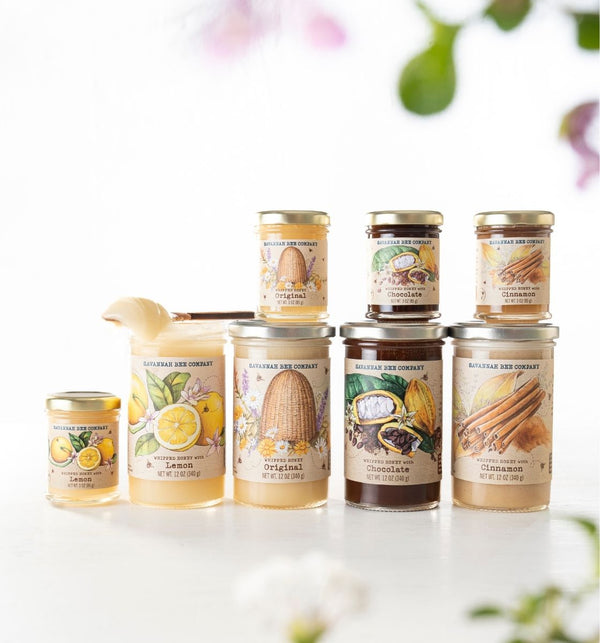
Acacia Honey is known for staying liquid longer. Whipped Honey takes the same basic texture story and turns it into something creamy and spreadable on purpose. Other honeys may move toward crystals more quickly depending on the bloom and the balance of sugars in the jar.
That is why crystallization is best understood as part of the honey’s character, not as a mistake.
Crystallized Honey vs. Whipped Honey
These are not the same thing, even though both can look thick and spreadable.
Crystallized honey happens naturally over time.
Whipped Honey is controlled texture. It is spun into a creamy, crystallized, spreadable form on purpose.
That is why Whipped Honey feels smooth and intentional, while a naturally crystallized jar may look more irregular.
Let the jar change.
One of the best things about honey is that it does not have to stay the same to stay good. Sometimes the clearest sign of real honey is that it keeps moving, slowly, toward a different texture.
Published
