






Why It Happens, and How to Bring It Back
Crystallized honey usually means your honey is acting like real honey.
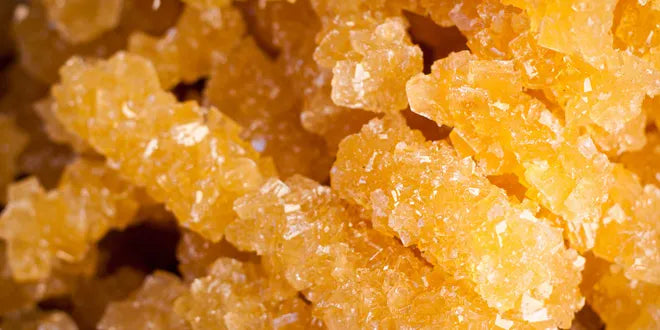
It hasn’t gone bad. It hasn’t been ruined. It hasn’t turned into sugar by mistake. Crystallization is a natural process that happens when some of the glucose in honey begins to separate from the water and form tiny crystals. Over time, a clear pour can turn cloudy, grainy, thick, or almost spoonable, depending on the honey and the conditions around it.
That change can surprise people, especially if they’re used to supermarket honey that stays perfectly smooth for long stretches. Distinctive honey behaves more honestly than that. It reflects its sugars, its floral source, its natural particles, and the temperature of the room it lives in.
Some Honeys Crystallize Faster Than Others
Not all honey moves at the same pace.
Crystallization depends in part on the balance of glucose and fructose in the honey. Honeys with more glucose tend to crystallize faster. Honeys with more fructose often stay liquid longer. Floral source matters here, which is one reason different honeys behave so differently in the jar.
Temperature matters too. Honey often crystallizes more readily in cool room conditions than it does in warmer ones. Tiny particles like pollen can also give crystals a place to begin forming. None of that is a flaw. It’s part of the product’s natural chemistry.
That’s why crystallization can actually tell you something useful. It reminds you that honey is not a manufactured syrup designed to behave the same way every time. It is a living expression of bloom, place, and composition.
Crystallized Honey Is Still Good Honey
In some cases, it’s excellent honey.
The flavor is still there. The floral character is still there. A buttery honey still tastes buttery. A bright honey still carries its lift. What changes is the texture. Instead of a flowing ribbon, you get something thicker, softer, sometimes almost spreadable.
A lot of people come to like honey in that state. It’s lovely on toast, especially when the crystals are fine and smooth. It feels generous on a biscuit. It stays where you put it.
So before you try to fix it, it’s worth asking whether it needs fixing at all. Honey that crystallizes has not lost its worth. It has simply changed form.
How to Return Honey to a Smooth Pour
If you want your honey liquid again, use gentle heat.
Set the jar in warm water and let it sit until the crystals begin to dissolve. The water should feel warm, not harshly hot. Give it time. Turn the jar now and then if needed, and let the heat work slowly through the honey. A patient warm-water bath is usually all it takes.
What you want to avoid is rushing it. Excessive heat can dull the finer qualities that make a good honey worth buying in the first place. If the honey has distinct floral notes or delicate texture, gentle handling matters.
Think restoration, not rescue. You’re not forcing the honey back into shape. You’re easing it there.
The Best Way to Warm Honey
Low and slow is the whole idea.
Glass jars do well with warm water because the heat feels even and controlled. If the honey is in a plastic container, it’s still better to warm it gradually rather than expose it to aggressive heat. Don’t let the process turn into cooking. Honey responds best when you treat it with a little restraint.
Once the crystals dissolve, the honey should return to a pourable texture. Over time, it may crystallize again. That’s normal. Some honeys cycle back more readily than others.
Can You Prevent Crystallization?
You can slow it down, though you usually can’t stop it forever.
Keeping honey in a more stable, slightly warmer room temperature can help. Storing it in a cool place often encourages crystals to form sooner. The jar should also stay tightly sealed, since honey does best when it’s protected from excess moisture in the air.
Still, prevention only goes so far. The honey will follow its own nature. A raw honey, a honey with more natural particles, or a honey whose sugar balance favors crystallization may eventually thicken no matter how tidy your pantry is.
That isn’t the honey failing. It’s the honey being itself.
A Natural Change in Texture
Crystallization is one of the clearest reminders that honey is not generic.
It changes. It settles. It responds to its composition and surroundings. That’s part of what makes it interesting. The same qualities that give a honey character in the mouth can shape how it behaves in the jar.
So if your honey has turned cloudy or firm, there’s no reason to panic. Warm it gently if you want the smooth pour back. Leave it as it is if you like the thicker texture. Either way, the bloom is still there, waiting for a spoon.


