


Raw vs. Filtered Honey

The difference is in the handling.
Raw honey and filtered honey both begin with bees, bloom, and nectar. The difference comes later, in how the honey is handled after harvest.
That distinction matters because handling changes what people see and feel in the jar. It can change clarity. It can change texture. It can change how uniform a honey looks from one pour to the next. But it doesn’t erase the deeper story of the honey itself.
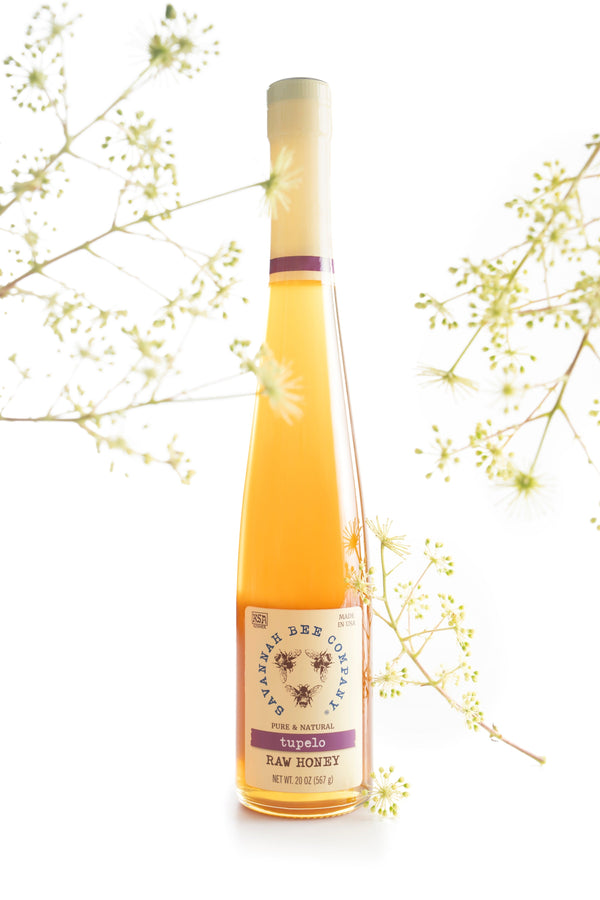
At Savannah Bee Company, that is an important distinction. A Tupelo Honey still won’t taste like an Orange Blossom Honey just because both are strained or filtered. A honey’s bloom and place still do the deeper work.
This guide explains what raw honey is, what filtered honey is, what handling can change, what handling can’t change, and how to read the shelf with sharper eyes.
What Is Raw Honey?
Raw honey is honey that has been handled more gently after harvest, so more of its natural character can stay intact.
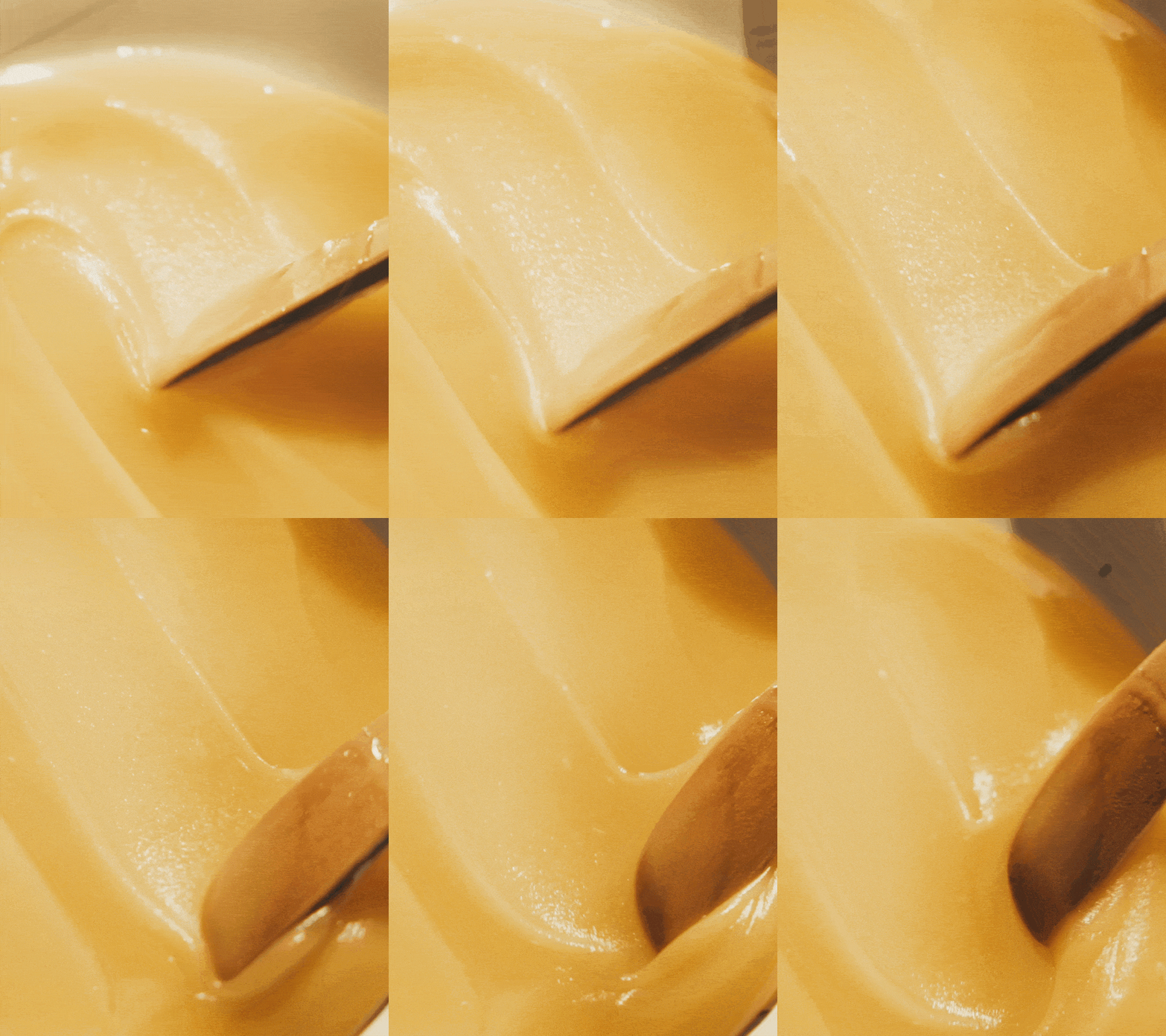
That character can show up in aroma, texture, color, and the way the honey behaves over time. Some raw honeys look clear and flowing. Some look cloudier. Some stay liquid for a long time. Some change texture more quickly. Raw honey does not have one fixed appearance.
What it usually offers is a stronger sense of variation from bloom to bloom and jar to jar.
What Is Filtered Honey?
Filtered honey is honey that has been processed further for a clearer, more uniform appearance.
Under USDA honey standards, filtered honey is honey that has been filtered to the extent that all or most of the fine particles, pollen grains, air bubbles, or other materials normally found in suspension have been removed.
That is why filtered honey often looks cleaner and more even in the jar. It has been moved further toward consistency.
Raw vs. Filtered Honey: The Simplest Difference
The easiest way to think about it is this:
Raw honey is usually handled with more restraint.
Filtered honey is processed further for clarity and consistency.
That is the core difference.
What Filtering Can Change
Filtering changes some things clearly and leaves others untouched.
Clarity
Filtered honey usually looks brighter, cleaner, and more uniform.
Texture
Raw honey may hold onto more of the shifting character people associate with specialty honey. Filtered honey often feels visually neater and more standardized.
Visual variation
A raw honey may look a little more alive in the jar. A filtered honey may look more even from batch to batch.
What Filtering Does Not Change by Itself
This is where the shelf gets more interesting.
It does not erase floral source
A Tupelo Honey still carries tupelo bloom. An Orange Blossom Honey still carries citrus blossom. Handling does not flatten one flower into another.
It does not erase geography
Georgia wetlands, northeastern Mexico citrus groves, and the black locust forests of Hungary and Romania still shape the honey.
It does not erase flavor differences
One honey can still be buttery, another bright, another floral, another delicate. Filtering may change the presentation, but it does not erase the identity of the bloom.
Why Raw Honey Often Feels More Distinctive
Raw honey often feels more distinctive because it tends to keep more of the variation people notice first.
That may show up as a different texture, a less uniform appearance, or a jar that feels closer to bloom and season. It can also show up in the way raw honey changes over time.
That does not mean every raw honey is automatically better. It means the experience is often less standardized.
Why Some People Prefer Filtered Honey
Filtered honey makes sense for people who want a more uniform look and a cleaner visual presentation.
For some shoppers, that consistency is the point. They want a honey that looks clear, pours predictably, and feels familiar from one jar to the next.
That is a preference in handling, not a cancellation of what bloom and place still bring to the jar.
Is Raw Honey Better Than Filtered Honey?
That depends on what you care about.
If you want a honey that presents more of its natural flavor and in-hive characteristics, raw honey may be the more interesting jar for you.
If you want a more standardized experience for cases like baking or everyday use, filtered honey may feel closer to what you expect.
The better question is not which word sounds purer. The better question is what kind of honey experience you want. Regardless of how you use them, all of our honeys are consistently clear and beautiful.
How to Read the Label
The front of the jar does not always tell the whole story.
FDA guidance says that a product containing only honey may be labeled honey, while products that contain honey plus other ingredients should use labeling that makes the presence of those other ingredients clear. FDA also says floral source claims should be truthful and supported.
That makes the full label worth reading.
Look for the style of honey
Raw, filtered, whipped, or honeycomb all tell you something different about the form or handling.
Look for the floral source
Tupelo, Acacia, Orange Blossom, Lavender, and Wildflower each tell a different bloom story.
Look for the place
A good honey should feel like it came from somewhere.
Look for language that makes sense
The clearest labels explain what the honey is without trying to hide the basics.
Raw, Filtered, and Monofloral Are Not the Same Thing
These terms often get blurred together, but they answer different questions.
Raw tells you how the honey was handled.
Filtered tells you how far that handling went.
Monofloral tells you what bloom leads the identity of the honey.
A honey can be raw and monofloral. It can be filtered and monofloral. These are related ideas, but they are not interchangeable.
Keep looking past the label.
The best honey shelves get easier to read once you know which questions belong to bloom, which belong to place, and which belong to handling.
Published
