


Local vs. Global Honey

Place changes honey, wherever the jar comes from.
Local honey has a powerful story. It feels close to home. It feels rooted in a familiar landscape. It often comes with the idea that nearer must mean better.
Sometimes that closeness is part of the appeal. But it is not the only path to remarkable honey.
Honey takes its character from bees, bloom, place, and season. That means a great jar can come from nearby wildflowers, but it can also come from tupelo wetlands in Georgia and Florida, orange groves in northeastern Mexico, lavender fields in Spain and Portugal, or black locust forests in Hungary and Romania.
This guide explains the difference between local honey and well-sourced global honey, why place matters so much, and why the best way to judge a jar is not simply by distance.
What Local Honey Means
Local honey usually means honey produced close to where you live or shop.
That definition sounds simple, but it can shift depending on who is using it. For some people, local means from the same town. For others, it means the same state or region.
What local honey often offers is a strong sense of place. It can feel personal, seasonal, and tied to a familiar landscape.
What Global Honey Means
Global honey is honey sourced from outside your immediate area, sometimes from another state, sometimes from another country.
That does not make it generic.
In the best cases, global honey is still highly specific. It can be tied to one bloom, one landscape, one harvest window, and one set of beekeepers who know exactly how to follow that nectar flow.
That is what makes well-sourced global honey worth understanding. It is not distant for the sake of distance. It is specific for the sake of flavor.
Why Place Matters in Honey
Honey is one of the clearest expressions of place in the pantry.
The flowers bees visit shape the nectar. The landscape shapes the bloom. The season shapes the harvest. The result is that geography does more than tell you where a honey came from. It helps explain why it tastes the way it does.
Place shapes flavor
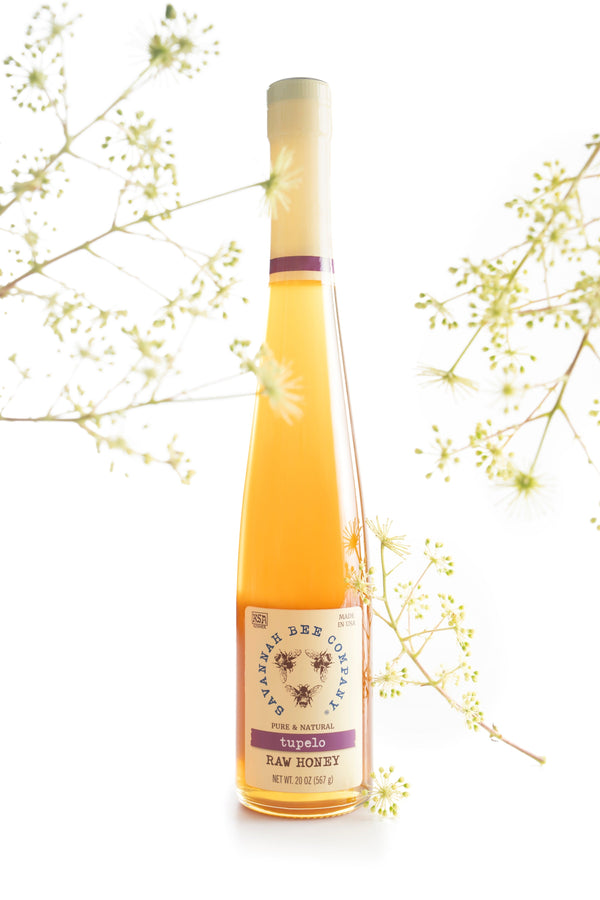
A honey from tupelo wetlands will not taste like a honey from orange groves. A honey from lavender country will not taste like a honey gathered from a broader mix of wildflowers.
Place shapes aroma
The smell of a bloom often carries through into the jar, which is why some honeys read citrusy, some floral, some buttery, and some deeper and more robust.
Place shapes texture too
Different floral sources can influence how a honey pours, how long it stays liquid, and how it behaves over time.
Local Honey Can Be Beautiful
When local honey is tied to a real landscape and a clear bloom story, it can be deeply expressive.
Savannah Honey makes that case well. It carries the imprint of Savannah and the surrounding landscape in a way that feels floral, rooted, and regionally specific.
Local honey matters because it can capture a familiar place in a jar. It can feel immediate. Seasonal. Grounded.
Global Honey Can Be Just as Distinctive
A remarkable honey does not stop being remarkable because it crossed a border, and it is our mission to bring the most impressive honeys from around the world to your table.
Some of the most distinctive honeys in the Savannah Bee Company world come from outside a customer’s home region, but they are anything but anonymous.
Acacia Honey
Acacia Honey comes from Hungary and Romania. It is pale, delicate, and known for its light vanilla notes and graceful texture.
Lavender Honey
Lavender Honey comes from Spain and Portugal. It is floral, rich, and shaped by the bloom story of lavender fields.
Orange Blossom Honey
Orange Blossom Honey comes from the groves of Florida, Spain, and northeastern Mexico. It carries a bright sweetness with a subtle citrus finish.
These honeys are global only in distance. In every other way, they are highly specific.
Local vs. Global Is the Wrong Question
A better question is this: is the honey well sourced, clearly labeled, and true to its bloom and place?
That gets closer to what actually matters.
A local honey without much clarity around bloom or handling may tell you less than a global honey with a real floral source, a clear region, and a flavor that matches its origin.
The strongest jars feel traceable. They make sense. They tell you something real.
Does Local Honey Really Help with Allergies?
This is one of the most common honey questions, and it deserves a careful answer.
Local honey carries a persuasive story because it feels personal and close to the environment around you. But major allergy sources say research has not shown honey to be a reliable treatment for seasonal allergies.
That does not mean local honey cannot be beautiful. It means local honey is better understood first as an expression of place than as a guaranteed allergy solution.
Is Honey from Other Countries Safe to Eat?
The better question is whether the honey is well sourced, properly labeled, and sold with clear information.
Distance alone does not tell you whether a honey is trustworthy. A jar from another country can still be highly specific, clearly identified, and deeply tied to one floral source, and no matter where we source our honey from, we’re careful to establish a relationship with the beekeepers who make it possible. Ted knows every one of our honey suppliers by name, which means more to us than just knowing that the honey was made nearby.
What to Look for When Buying Honey
The best honey shelves get easier to read once you know what to look for.
Look for a named floral source
Tupelo. Acacia. Lavender. Orange Blossom. Wildflower. A real bloom gives the jar a clearer point of view.
Look for a real place
A honey should feel connected to a landscape, not just a vague idea of quality.
Look for labels that make sense
FDA guidance says floral source claims should be truthful and supported. A good label should help explain the honey, not blur it.
Look for flavor that matches the story
If the jar says orange blossom, the honey should carry citrus brightness. If it says tupelo, the flavor should not feel generic.
Traceable Honey Matters More Than Nearby Honey
Place matters, but so does transparency.
The most convincing honey is honey that tells a clear story: what bloom led the jar, where it came from, and why it tastes the way it does.
That is why traceable honey matters more than locality as a shortcut to identify quality. The best jars do not hide behind broad language. They give you something specific enough to follow.
Follow the place, not just the distance.
The best honey does not become more meaningful simply because it is harvested closer to home. Honey is meaningful when it supports the hive, the bloom, and the landscape that it’s drawn from—resulting in a richer, more fulfilling flavor that proves what is good for the planet is also good for us.
Published
